Compact Binaries in the globular cluster NGC 6397
Manuel Pichardo Marcano
Supervised by
Thomas J. Maccarone
Collaborators:L. E. Rivera Sandoval, N. Webb, S. Guillot

October, 2019
Compact Binaries
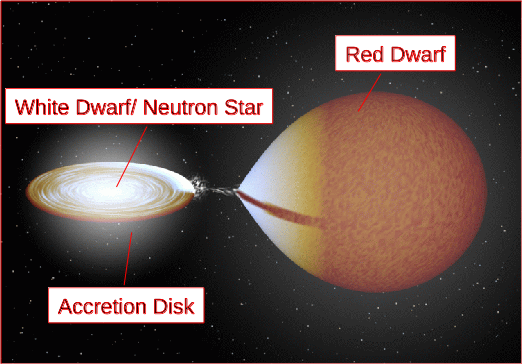
Cataclysmic Variable/ Low-mass X-ray Binary
- White dwarf / Neutron star as primary:
- MS star companion
- Accretion (usually) via a disk:
- Disk instability outbursts. Increase several magnitudes
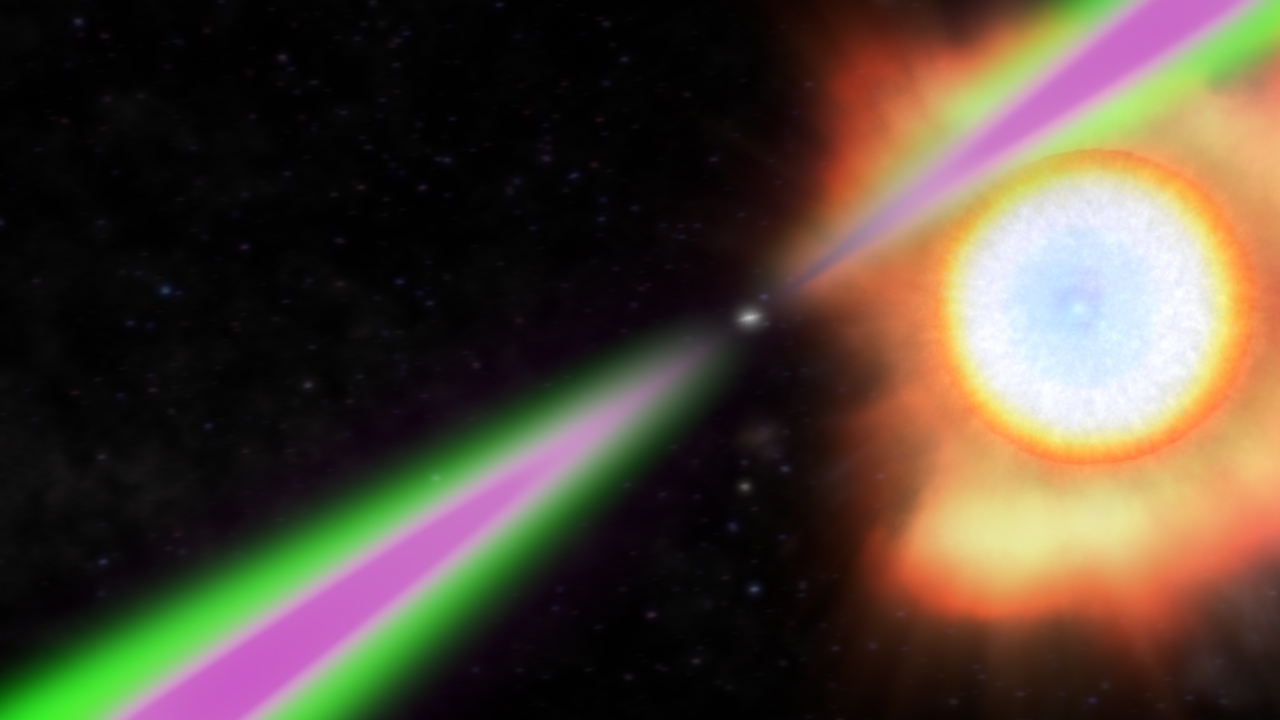
Redback System
Binaries in Globular Clusters
- Globular Clusters
- The binary population drives the dynamical evolution of GCs
- Cataclysmic Variables:
- Potentially very different from field CVs
- A lot of open questions
- Neutron Stars:
- Known distance binary in GC
- Estimate equation of state (mass-radius relation)
- Gravitational Waves:.
- White dwarf degenerate sources for LISA
Binaries in NGC 6397
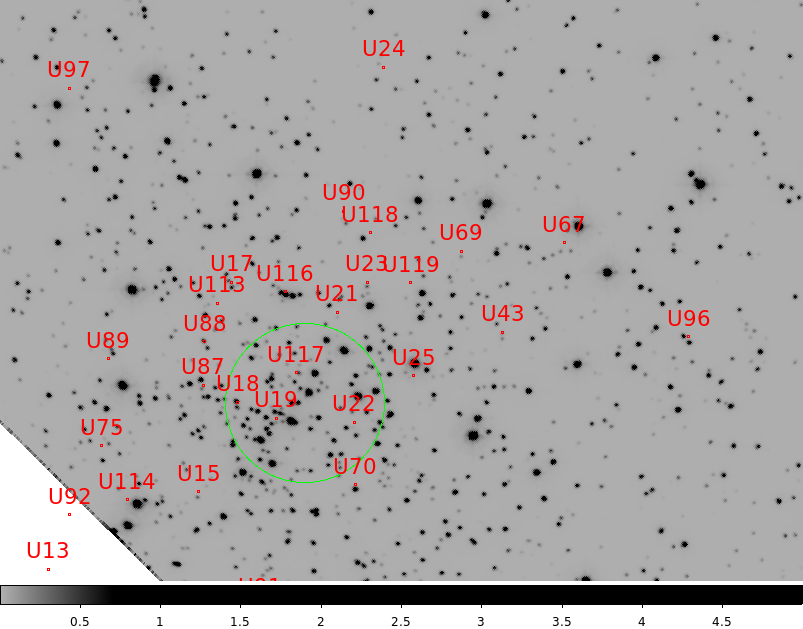
Known X-ray sources
- Cataclysmic Variables
- 15 CV Candidates
- Millisecond Pulsars (MSPs):
- One radio confirmed and one candidate
- Neutron Stars:
- One qLMXB and possibly ultracompact
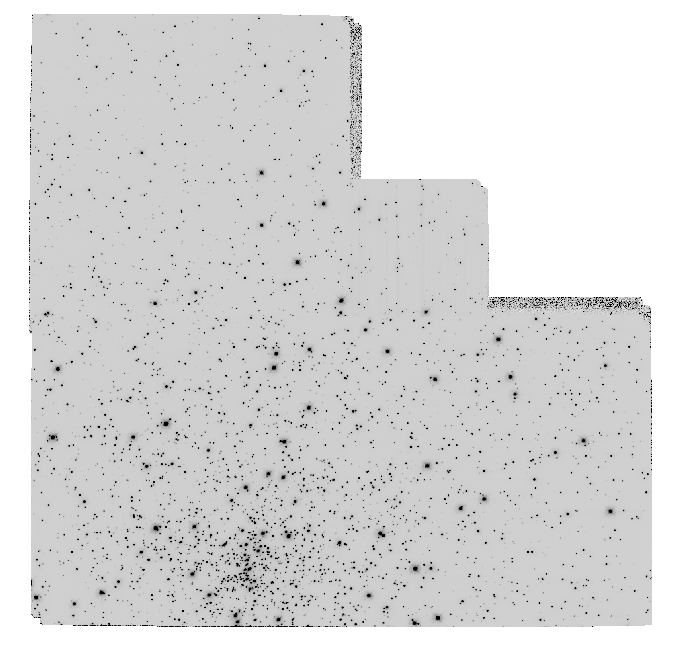
Hubble Space Telescope
Wide Field Planetary Camera 2
- March-April 2005:
- 126 Orbits
- F814W, F606W and F336W
- Exp time:500-700 s
- March-April 2005:
- 126 Orbits
- F814W, F606W and F336W
- Exp time:500-700 s
Light Curves
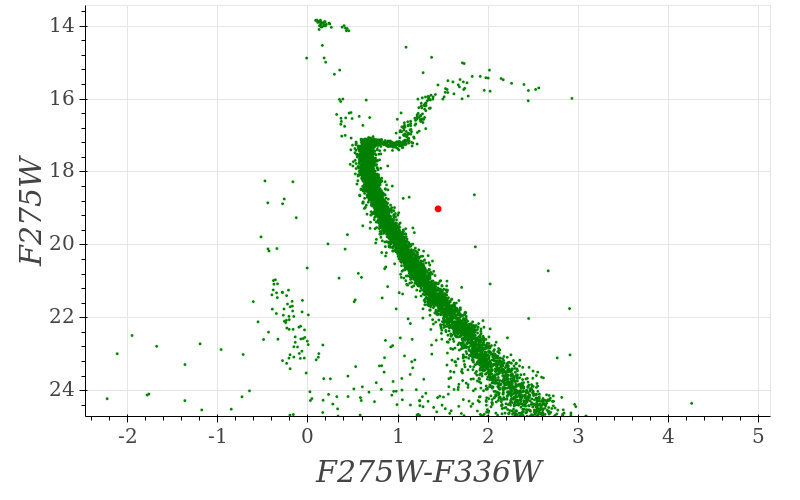
U18
Candidate MSP. Possible redback system.
U18
Candidate MSP. Possible redback system.
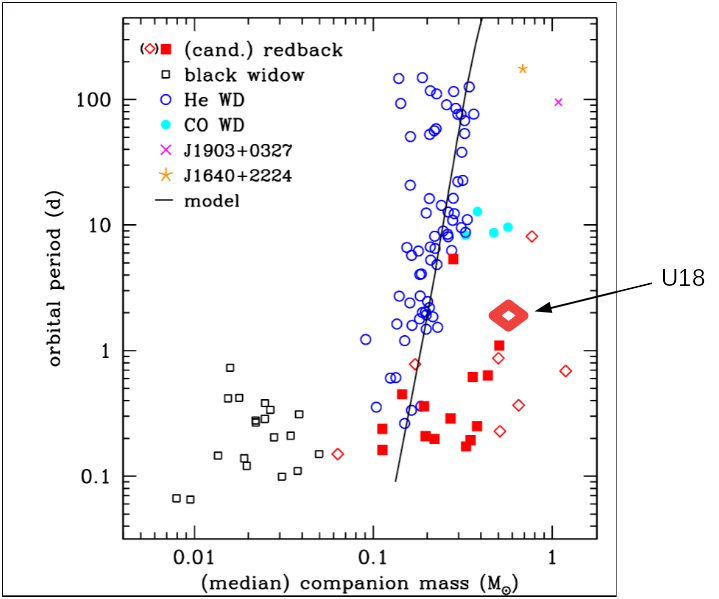
New Candidate RedBack
- $P_{orb} = \text{ 1.98 days}$
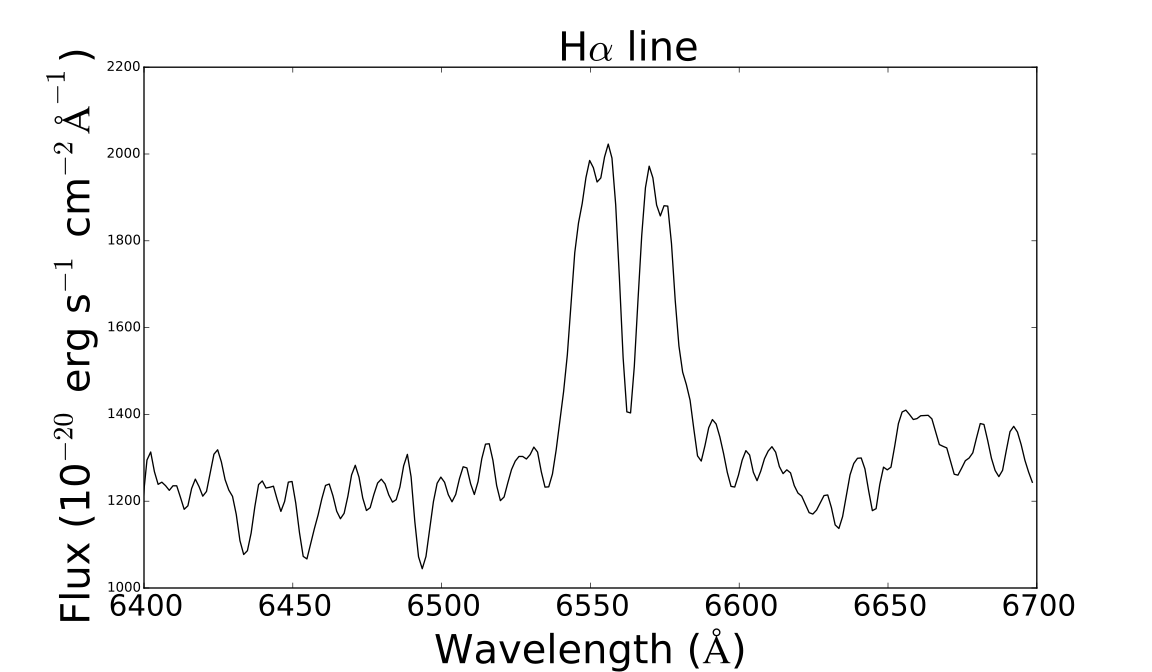
- Narrow H$\alpha$ emission
- FWHM ~ 170 km/s
- From Husser et al. 2016
- $\Delta v_{rad} \ge$ 145.9 km/s
New Candidate RedBack
- "Median" masses:
- Inclination 60°
- NS 1.35 $M_\odot$
- $M_{donor} \approx 0.5 M_\odot$
Future Work
- Follow up Observations
- Radio data NGC 6397
- Other clusters with Hubble
- MUSE Adaptive Optics and extended range
- Variability:
- Find more periods
- MUSE Datacube:
- Systematically search for emission:
- Helium emitters (AM CVn ?)
- Planetary Nebula
- Active Binaries
Gracias
|
Department of Physics and Astronomy |